



Send Message
Privacy statement: Your privacy is very important to Us. Our company promises not to disclose your personal information to any external company with out your explicit permission.

Outdoor stone features can give a landscape a distinctive identity. A marble fountain may become the focal point of a hotel garden, a carved planter can define a villa entrance, and a stone gazebo can create a welcoming place to gather.
However, selecting natural stone for an outdoor project involves more than choosing an attractive design. The surrounding environment, intended use, surface finish, installation conditions and maintenance expectations all influence the final result.
For architects, landscape designers, developers and project buyers, considering these factors early can help reduce uncertainty during design coordination, production and installation.
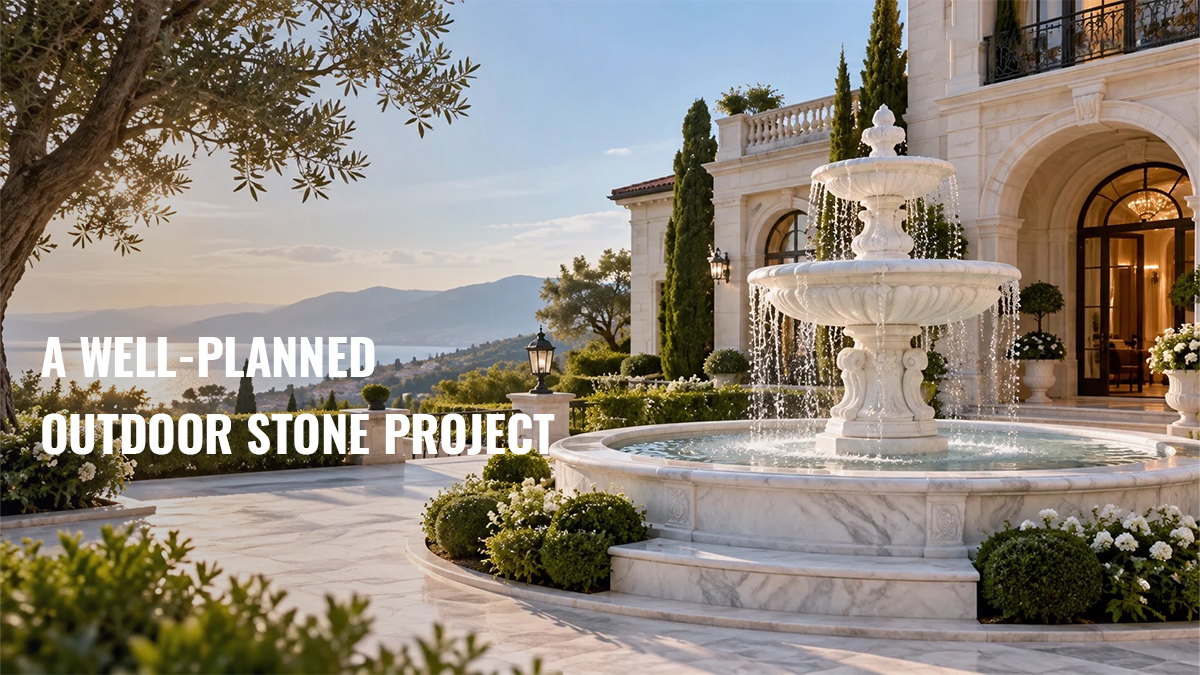
Before selecting a material, consider where and how the stone feature will be used.
An open garden, a covered terrace, a poolside area and a hotel entrance may have very different environmental conditions. Exposure to rain, direct sunlight, temperature changes, moisture and airborne salts can affect the performance and appearance of different stone types.
The first step is to understand the project location and its expected conditions. For example, a feature installed in a region with frequent freezing temperatures may require different material and construction considerations from one in a mild climate.
Rather than choosing a stone based on appearance alone, discuss the intended application, local climate and relevant technical requirements with your supplier. Material suitability should be assessed for the specific project instead of assumed from the stone's name or appearance.
Surface finish affects both the visual character and practical use of an outdoor stone element.
A polished finish can emphasize natural veining and create a more formal appearance. A honed or textured finish may offer a different visual effect and may be more appropriate for certain landscape styles.
The right choice depends on where the product will be installed and how people will interact with it. For walking surfaces, steps and areas around water, slip resistance and local safety requirements should be evaluated carefully. A finish that looks attractive in a product photograph may not be the most suitable option for every application.
When reviewing samples or product images, consider the appearance under natural light as well as the intended use. Ask your supplier to clarify the available finishes and provide relevant technical information before confirming the specification.
A design that looks straightforward on screen may require additional planning once it reaches the construction site.
Large fountains, stone columns, gazebos and sculptural features can involve substantial weight, multiple components or detailed assembly requirements. Access routes, unloading space, lifting equipment, foundations and installation sequencing should therefore be considered before production begins.
For custom stonework, the project team should confirm key dimensions, connection details, component divisions and any site-specific requirements. Where structural support or anchoring is involved, qualified project professionals should verify the design and installation method.
It is also important to consider how the product will be transported. Packaging dimensions, access restrictions and handling requirements can affect delivery planning, especially for large or delicate carved elements.
Early coordination between the designer, supplier, contractor and installation team can help prevent avoidable changes later in the project.
Outdoor stone is exposed to changing weather and regular use. Its appearance over time depends on several factors, including the material selected, the surface finish, the surrounding environment and the maintenance routine.
Before finalizing a specification, consider how the stone will be cleaned, whether it will be exposed to standing water or organic debris, and what maintenance resources will be available after installation.
Cleaning products and protective treatments should be compatible with the selected stone and finish. Avoid assuming that one maintenance method works for every natural stone. Ask for material-specific recommendations and test any proposed treatment in an inconspicuous area when appropriate.
For commercial landscapes and hospitality projects, maintenance access is particularly important. A fountain or decorative feature should be planned not only for its initial visual impact, but also for the practical needs of keeping the surrounding space in good condition.
Material selection, carving complexity, custom dimensions, component size, finishing requirements, packaging and international shipping can all influence a project's cost and schedule.
A useful specification should identify the priorities before a quotation is finalized. These may include the desired appearance, approximate dimensions, required quantity, installation location, target delivery date and any relevant drawings or reference images.
For custom features, sharing this information at the beginning helps the supplier assess the scope more accurately and identify questions that need to be resolved before production.
If the project includes several stone elements, it is also worth confirming whether their materials, finishes and dimensions need to follow a coordinated specification. This is particularly relevant when multiple pieces will be installed together in a courtyard, hotel landscape or estate entrance.

Choosing natural stone for an outdoor project is a balance between design intent and site-specific requirements. A successful specification considers not only how a feature should look, but also how it will be used, installed, maintained and experienced over time.
At Bribrion, we work with project clients on customized stone elements for outdoor and architectural applications, including fountains, planters, gazebos, columns and sculptural features. Sharing your project drawings, reference images, dimensions and intended installation environment is a useful starting point for discussing suitable design and material options.
Planning an outdoor stone feature for a villa, hotel or landscape project? Contact Bribrion to discuss your design requirements and explore a customized solution for your project.
Email to this supplier

Privacy statement: Your privacy is very important to Us. Our company promises not to disclose your personal information to any external company with out your explicit permission.
Fill in more information so that we can get in touch with you faster
Privacy statement: Your privacy is very important to Us. Our company promises not to disclose your personal information to any external company with out your explicit permission.